
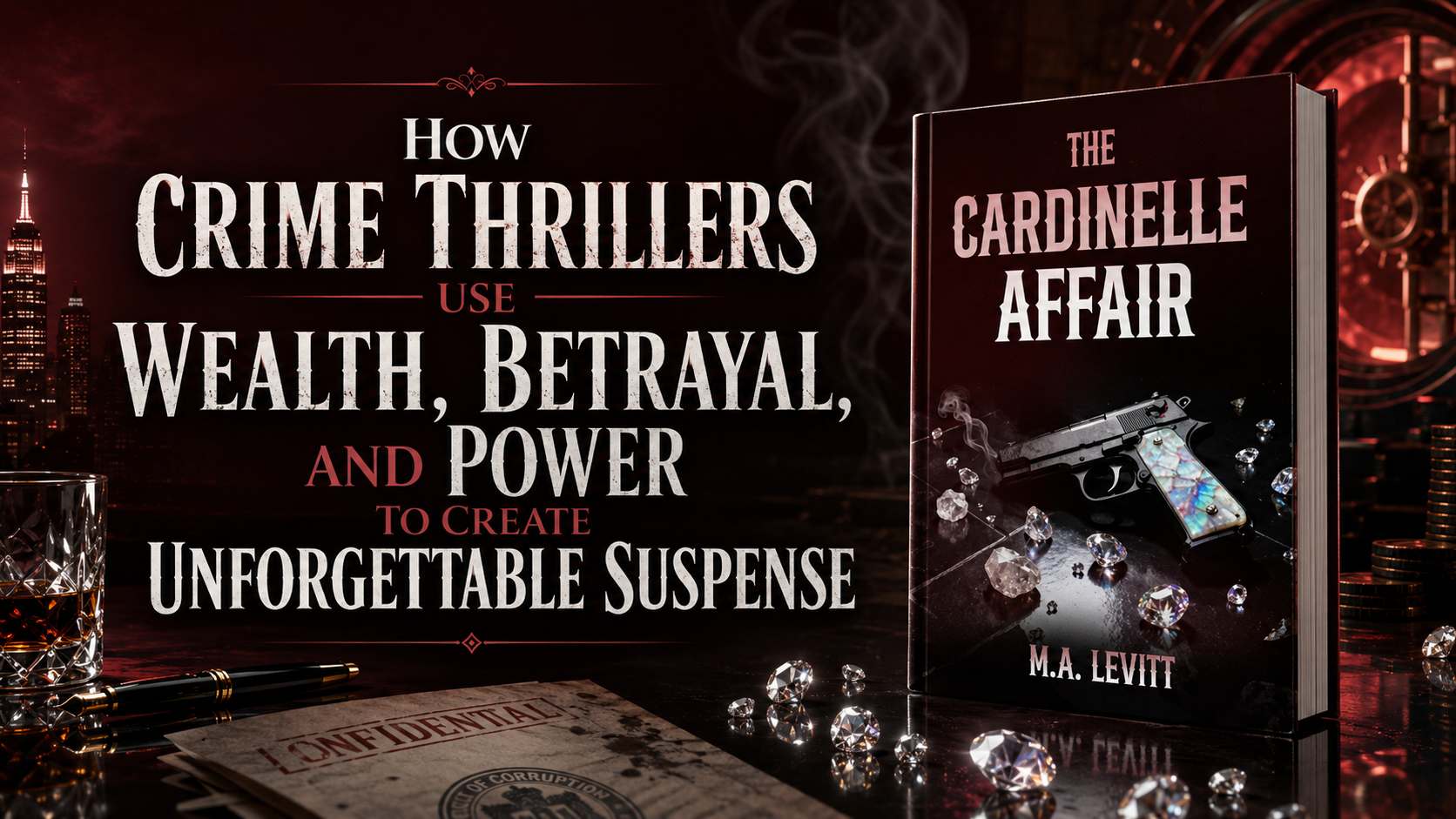
The best crime thrillers are never only about a body, a weapon, or a detective chasing answers. Those elements may open the door, but the real suspense comes from what hides behind it: money, influence, family secrets, political pressure, and people powerful enough to make the truth disappear.
That is why crime thriller novels continue to hold such a strong place in American reading culture. Readers want danger, but they also want motive. They want to know who benefits, who lies, who is pretending, and who has enough power to bend the rules without leaving fingerprints.
In stories built around wealth and betrayal, suspense becomes more than a question of survival. It becomes a test of trust. A polished office, a family estate, a private jet, a sealed vault, or an international business deal can become just as threatening as a dark alley. In that kind of world, people do not always attack with a gun. Sometimes they attack with a signature, a fake death, a missing shipment, or a secret no one was supposed to uncover.
That is the engine behind unforgettable crime fiction: the reader knows something is wrong, but the full shape of the danger keeps shifting.
Why Crime Thriller Novels Keep Readers Hooked
Crime thriller novels work because they create pressure from the first page and refuse to let it go. The pacing matters. Every chapter needs movement. A suspicious death, a missing asset, a threatening phone call, or a sudden discovery can turn a quiet scene into a warning sign.
But speed alone is not enough. Strong crime thrillers keep readers hooked because they combine action with uncertainty. The reader is always asking: Who is lying? Who is being used? Who is pretending to help? Who has already planned the next move?
That constant uncertainty is what separates a flat mystery from a gripping thriller. In a traditional mystery, the reader may focus on solving the crime. In a thriller, the reader feels the crime expanding. The danger does not sit still. It grows.
Dangerous characters also make the genre addictive. A compelling villain does not always look wild or reckless. Often, the most dangerous person in a crime thriller is calm, wealthy, well-dressed, and protected by reputation. They know how to use silence. They know how to use fear. They know how to make other people do the dirty work.
The best stories also understand that trust is fragile. A business partner can become a suspect. A family member can hide a motive. A respected figure can turn out to be the source of corruption. This is why readers keep turning the page. They are not only following clues. They are testing every relationship.
The Role of Wealth and Corruption in Crime Thrillers
Wealth gives crime thrillers a sharper edge because money creates access. It opens doors, hides mistakes, buys loyalty, and protects reputations. In industries built on secrecy, high-value assets, and international relationships, corruption can thrive behind polished surfaces.
This is especially powerful in crime thrillers that involve luxury goods, finance, politics, real estate, technology, or international trade. These worlds come with public prestige, but they also create perfect conditions for betrayal. A missing shipment may not be a simple theft. It may expose an entire network. A business dispute may not be about profit alone. It may be about control.
Readers respond to these settings because they reveal a truth that feels disturbingly believable: crime does not always come from desperation. Sometimes it comes from entitlement. Sometimes it comes from people who already have everything but still want more.
Wealth also raises the emotional stakes. When powerful families or business empires are involved, the damage reaches beyond money. A betrayal can destroy a legacy. A secret can rewrite a family history. A hidden alliance can turn a trusted name into a threat.
This is where crime thrillers become more than entertainment. They show how corruption moves through systems. It does not always announce itself. It hides in contracts, private meetings, coded conversations, and quiet decisions made far from public view.
What Makes a Political Crime Thriller More Intense
A political crime thriller raises the stakes by connecting private crimes to larger consequences. A murder may begin as a local investigation, but soon it touches intelligence agencies, international business, government pressure, or cross-border criminal networks.
That wider scope gives the story urgency. The crime is no longer isolated. It may affect national security, diplomatic relationships, financial markets, or entire industries. When politics enters the story, every decision becomes more dangerous because the truth is not only personal. It is strategic.
This is why political crime thriller stories often feel larger than standard crime fiction. They operate in a world where official statements may be misleading, agencies may know more than they reveal, and powerful figures may protect secrets for reasons that are not immediately clear.
Readers enjoy this complexity because it mirrors real anxieties. In the United States, audiences are familiar with headlines about corruption, intelligence failures, international conflict, corporate influence, and institutional distrust. A strong political crime thriller takes those concerns and turns them into a tight, suspenseful narrative.
The best ones do not lecture. They dramatize. They show how one hidden crime can connect to a larger machine. They make readers feel that every clue matters because one wrong move could expose something far bigger than anyone expected.
Strong Characters Make the Suspense Personal
Suspense works best when readers care about the person trapped inside it. A clever plot can impress readers, but a strong character makes them feel the danger.
In crime thrillers, the central character often carries emotional weight before the crime even begins. Family conflict, grief, betrayal, personal loss, or an unresolved past can make the investigation feel intimate. The protagonist is not simply trying to solve a case. They are trying to understand what happened to their life.
That emotional history matters. A character who has been ignored, underestimated, manipulated, or hurt has a personal reason to keep digging. The truth is not abstract. It belongs to them.
This is especially effective when the protagonist is surrounded by people who doubt them. If everyone accepts the official story but the central character senses something is wrong, the suspense becomes psychological. The reader steps into that suspicion. They begin to notice every pause, every contradiction, every detail that does not fit.
Strong characters also create conflict through attitude. A protagonist does not need to be soft to be relatable. Some of the most memorable thriller characters are sharp, sarcastic, guarded, and difficult because life has taught them to be that way. Their flaws make them human. Their instincts make them dangerous.
When a crime thriller combines emotional damage with intelligence and courage, the result is a character readers want to follow through every threat.
Why Deception Is the Engine of Great Crime Fiction
Deception is the heartbeat of great crime fiction. Without it, there is no suspense. A crime may begin the story, but deception keeps it alive.
False deaths, missing assets, secret identities, hidden alliances, staged scenes, and carefully planted evidence all force readers to question what they think they know. A body may not tell the whole story. A will may not reflect the truth. A loyal partner may be playing both sides. A criminal may be closer than anyone wants to believe.
This uncertainty creates the pleasure of the genre. Readers are invited to investigate, but the story keeps moving the target. Every answer produces another question.
Deception also reveals character. Some people lie to survive. Others lie to protect someone. The most dangerous lie for control. Crime thrillers become unforgettable when the reader understands that deception is not random. It is planned, layered, and motivated.
That is why wealth, betrayal, and power work so well together. Wealth provides the tools. Betrayal provides the emotional wound. Power provides the protection. Once those forces collide, the mystery becomes bigger than one crime.
A great crime thriller makes the reader feel that the truth exists, but reaching it will cost something.
Conclusion
Modern crime thrillers succeed when they combine danger, emotional stakes, political tension, and a mystery that grows bigger with every chapter. Readers want more than a crime to solve. They want a world where secrets have consequences, trust is risky, and every polished surface may hide something rotten underneath.
That is why crime thriller novels built around wealth, betrayal, and power remain so compelling. They turn private ambition into public danger. They expose how corruption can hide behind respectability. They remind readers that the most dangerous people are not always the ones holding the weapon. Sometimes they are the ones controlling the room.
For readers who enjoy sharp suspense, international intrigue, dangerous secrets, and characters forced to fight through deception, a political crime thriller offers exactly what the genre does best: a story where every clue matters, every alliance is uncertain, and the truth becomes more explosive the closer it gets.